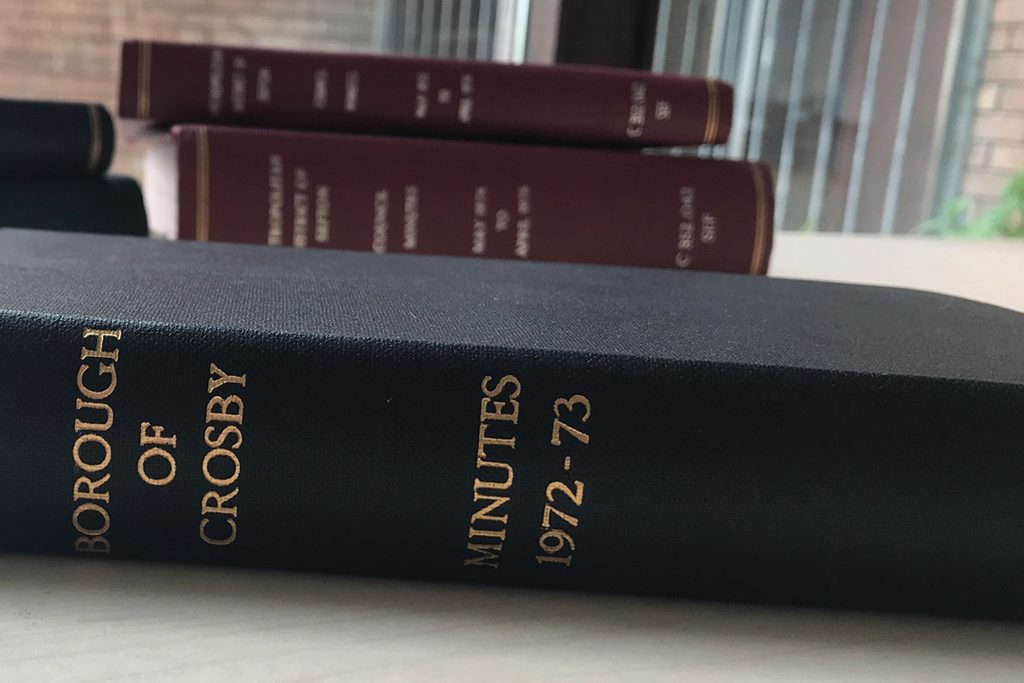
Sefton was formed on 1 April 1974, by the amalgamation of the county boroughs of Bootle and Southport, the municipal borough of Crosby, the urban districts of Formby and Litherland, and part of West Lancashire Rural District.
Early history
The earliest evidence of human habitation in the area that is now Sefton dates back to the Mesolithic period, around 8,000 years ago – including the discovery of rare 8,000 year old houses at Lunt Meadows in 2012.
During the Roman era, the area was part of the Roman province of Britannia. The evidence for Roman settlement in Sefton is still sparse by comparison with many areas of lowland England, but is steadily increasing.
Anglo-Saxon period
After the Romans left Britain in the 5th century, the area was settled by the Anglo-Saxons. The Anglo-Saxons built a number of villages in the area, including Sefton and Crosby. The area was part of the Kingdom of Mercia, and it was later ruled by the Vikings.
Formby is generally believed to have been founded in the 10th century AD by Norwegian settlers, hence
the name, the Norse derived Fornebei, recorded in the Domesday Survey of 1086.
Middle Ages
The Molyneux family settled in Lunt, Sefton and they lived in a Hall there near the present-day St Helen’s Church. The family were descendants of the knight, William de Molines, who came over during the Norman Conquests from a town called Moulineaux, in Normandy, France.
They owned most of the Sefton area but over the years were also granted land in Liverpool. Their family crest is the Cross Moline. It is still used by Sefton Council and Croxteth Country Park.
18th and 19th centuries
The area became a major centre of industry and commerce. The Mersey Docks and Harbour Board was established in 1858 which played a major role in the development of the area, and later the town of Bootle became an important port. The Liverpool and Manchester Railway was opened in 1830, and it made Sefton more accessible to people from all over the country.
20th century
Sefton continued to grow and develop in the 20th century. The area was heavily bombed during the Second World War, but it was rebuilt afterwards and the areas of Southport and Formby became popular holiday destinations.
Today
Today, Sefton is a thriving metropolitan borough – home to a number of different towns and villages, each with its own unique history.